Are non-woven fabrics better than woven fabrics?
Geotextiles are an essential component in various civil engineering projects such as road constructions, railways, irrigation systems, and more.
Non-woven fabrics and woven fabrics - the comparison between the two is long-standing. Each has its own set of strengths and weaknesses, which make them suitable for different purposes. Non-woven fabrics, however, are generally more versatile and more cost-effective.
What are Non-woven Fabrics?
Non-woven fabrics are those fabrics that do not have any interlacing or weaving of the yarns. In other words, they are not produced by weaving, knitting, or braiding. Instead, the production of non-woven fabrics is based on the bonding of fibers or filaments using mechanical, thermal, or chemical techniques. The materials used to produce non-woven fabrics can vary, ranging from natural fibers like cotton and wool to synthetic fibers such as rayon, polyester, and polypropylene. Non-woven fabrics have a lot of applications, including the medical industry, the automotive industry, and geotextiles.
Geotextiles are an essential component in various civil engineering projects such as road constructions, railways, irrigation systems, and more. They are materials that are designed to improve the overall quality and longevity of a project by stabilizing soil, controlling erosion, and enhancing drainage. Two primary types of geotextiles are available in the market - non-SPC Vinyl Floor and woven geotextile. Both have their own set of strengths and weaknesses.
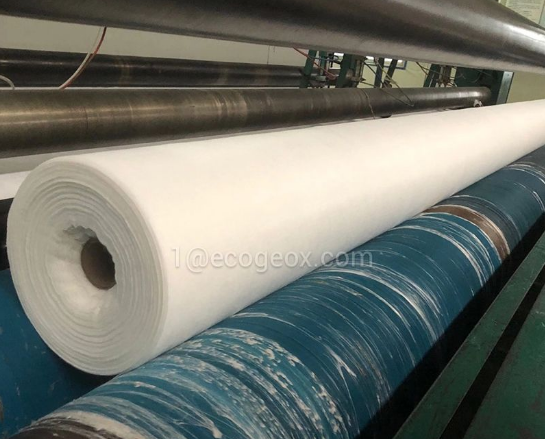
Non-woven Geotextile vs. Woven Geotextile
Non-woven geotextile is produced through a process that involves the entanglement of fibers that are bonded together by mechanical techniques. These fabrics are generally of lower strength but larger pore sizes, which makes them permeable, allowing water to pass through. On the other hand, woven geotextile is produced through the interlacing of two or more sets of yarns, which creates a strong and durable material with smaller pore sizes. It is less permeable but offers better filtration efficiency.
The choice between non-woven geotextile and woven geotextile depends largely on the application. Non-woven geotextile is used for applications where a high level of drainage is required, such as in landfill drainage or subgrade stabilization. While woven geotextile is used in applications where high strength and durability are essential, such as in road widening, undercutting, and soft ground soil stabilization.
Are Non-woven Fabrics Better than Woven Fabrics?
The answer to this question largely depends on the application. Non-woven fabrics offer several advantages, such as lower cost, high absorbency, and improved filtration efficiency. They are also easier to produce and have a wider range of applications. Woven fabrics, on the other hand, have higher strength and durability, making them suitable for heavy-duty applications.
Conclusion
The decision to choose between non-woven fabrics and woven fabrics ultimately boils down to the specific application. For geotextile applications, non-woven geotextile and woven geotextile serves different purposes, and both has its own set of advantages and disadvantages. With the rise of non-woven fabrics in various industries, it is important to understand their strengths and weaknesses to make the best choice for your project.
If you are looking for a reliable supplier for quality geotextile fabrics, whether it is Non Woven Geotextile or Woven Geotextile, contact us today. We are a trusted supplier of geotextile fabrics, and our team is always ready to help you find the perfect solution for your project.
We've numerous great employees customers excellent at promoting, QC, and working with kinds of troublesome difficulty inside the generation method for Non Woven Geotextile,Geosynthetics Clay Liner Manufacturer,Geocomposite Exporter,Non Woven Geotextile,geogrid mesh,Concrete Protective Liners,Biaxial Geogrid Mesh